You can change your maintenance plan dozens of times and still not lower your cost per hour.
Why?
Because a maintenance plan is only one tool in the toolbox.
Preventive maintenance helps keep your machine running properly today. It gives your team a routine for checking the equipment, catching immediate issues, and addressing problems before the next shift, week, or month.
But here’s the catch: preventive maintenance isn’t designed to solve the long-term, recurring problems that drive up your cost per hour as components begin to fail.
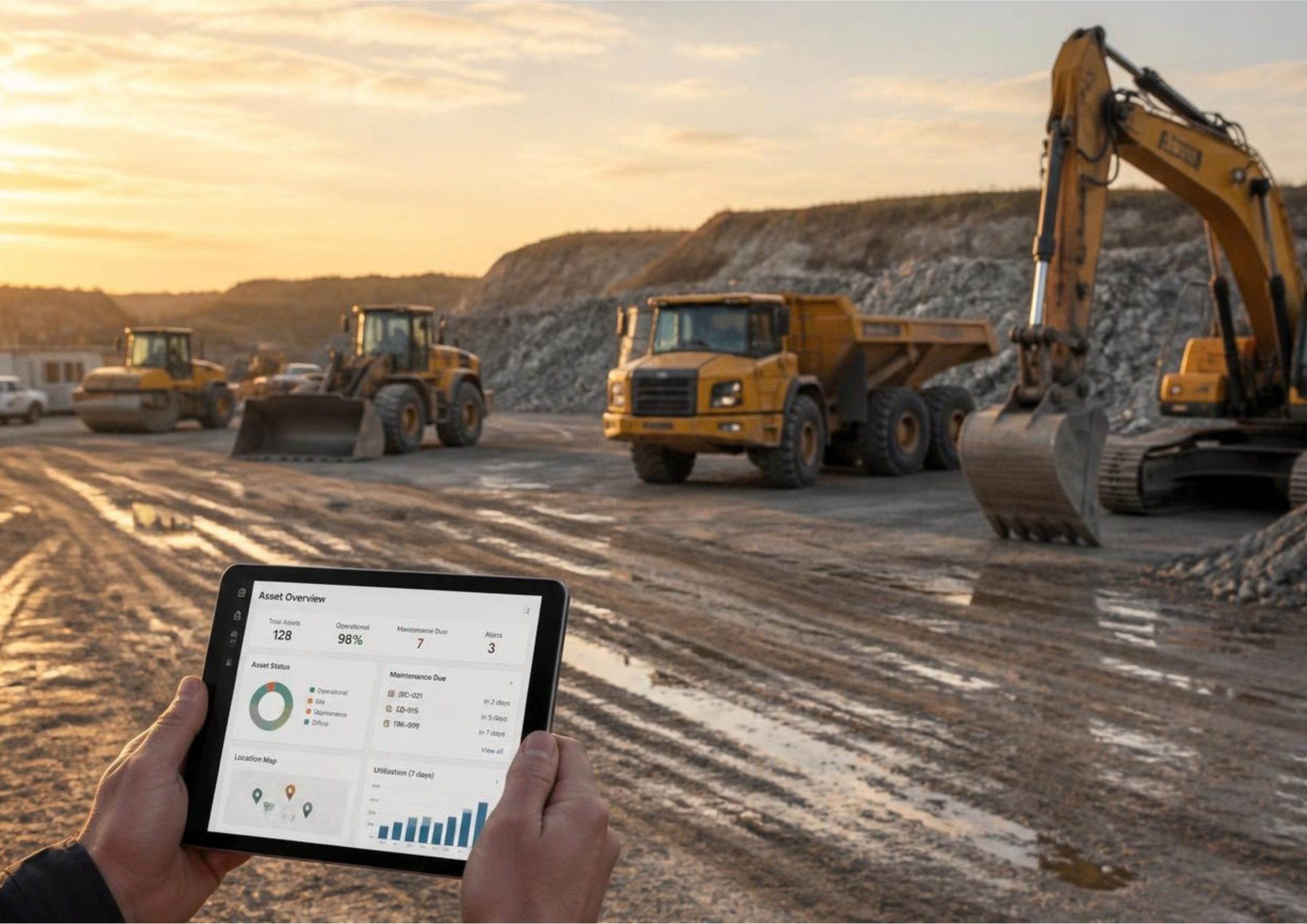
Preventive maintenance catches problems. Predictive maintenance catches patterns.
To reduce your cost per hour, you need to look beyond today’s checklist. You need to understand:
Which failures keep happening throughout the equipment’s rebuild life cycle
How long components actually last in your working environment
Whether the equipment is suited to the geography and the job
Whether operators are using it within its intended purpose and operating range
That’s where predictive maintenance and condition monitoring come in
They help you track failure history, determine realistic component life, and identify the right time to repair or replace parts – before an unexpected failure disrupts production.
Preventive maintenance gets you through the month. Predictive maintenance gets you through the machine’s life.
And when you use preventive maintenance, predictive maintenance, and condition monitoring together, you can start making a real impact: lower your cost per hour, increase production, and bring your failure rate under control.
Preventive maintenance gets you through the month. Predictive maintenance gets you through the machine’s life.
You keep adding tasks to your preventive maintenance plan, but your failure rate isn’t dropping. The same components continue to fail.
Why?
Because maintenance plans aren’t designed to eliminate failures. They’re designed to catch small problems before they become expensive ones.
Think about a leaking hydraulic hose
A preventive maintenance inspection catches the leak early, so you replace the hose before the machine loses its hydraulic oil, the pump runs dry, and you’re facing a costly pump replacement and system flush.
That’s a big win – but it doesn’t mean the hose will never fail again. It means you caught the problem before it became a much larger failure.
Preventive maintenance gets you through the month. Predictive maintenance gets you through the machine’s life.
So, how do you reduce the frequency?
That’s where failure analysis, predictive maintenance, and condition monitoring come in.
Every operation is different. Your environment, equipment, and working conditions create unique failure patterns. These tools help you identify those patterns and understand when failures are likely to happen.
Let’s say your failure analysis shows that your machines routinely need axle replacements at half the expected component life.
You conduct a root cause analysis and discover that the axles are failing early because of the extreme conditions in your operating environment.
Now you have something powerful: a predictable failure.
Instead of waiting for the next axle to fail in the field, you can schedule its replacement halfway through the rebuild cycle and add it to your preventive maintenance program as a routine job.
That means:
No unexpected breakdown in the field
No costly tow back to the shop
No production time lost while waiting for parts
No emergency repair driving up your costs
The goal isn’t just to find failures. It’s to get ahead of them.
Knowing the pattern is only half the battle. The other half is using that knowledge effectively.
When predictive maintenance and condition monitoring work alongside preventive maintenance, you can identify what is creating your major costs. That might be one high-dollar failure, or dozens of smaller failures that add up to the same thing.
With that information, you can make better decisions. You might:
Choose a different equipment brand, make, or model
Replace certain components before their predicted failure point
Adjust your maintenance strategy
Change your overhaul strategy based on actual failure data
Modify how or where the equipment is being used
But a preventive maintenance plan alone won’t give you the full picture. Without failure analysis, predictive maintenance, and condition monitoring, you’ll continue reacting to the same failures and absorbing the same costs.
A maintenance plan tells you what needs attention today. Failure data tells you what needs to change tomorrow.
When you combine the right tools with the skills to interpret the information, you can lower costs, increase production, reduce field failures, and improve the long-term health of your equipment.
What is preventive maintenance, and how is it different from predictive maintenance?
The simplest way to explain it is this:
A maintenance plan tells you what needs attention today. Failure data tells you what needs to change tomorrow.
Preventive maintenance is the routine servicing and inspection of your equipment, typically based on the manufacturer’s recommendations.
That includes things like changing oil, inspecting critical components, and looking for signs of current or developing problems.
For example, imagine an inspection finds play in a U-joint. You replace it right away because, if it fails, it could damage the driveline and several other components along with it.
Preventive maintenance catches that small problem before it becomes a costly failure.
Predictive maintenance goes a step further. It uses your equipment’s operating conditions and failure history to determine when maintenance should happen.
Let’s use that same U-joint example.
Suppose you’ve had five driveline failures in the past year, and each one happened within the same range of operating hours. That’s no longer a random failure – that’s a pattern.
Predictive maintenance uses that pattern to tighten your inspection interval so you can find and replace the U-joint before it fails.
Preventive maintenance asks, “What should we inspect?” Predictive maintenance asks, “When is this likely to fail?”
Predictive maintenance is more dynamic because your equipment’s conditions are always changing. A machine working in a harsh environment may need more frequent oil changes, tighter inspection intervals, and earlier component replacement than the manufacturer’s standard recommendations suggest.
But it can work the other way, too
Your data may show that certain components are under less stress in your operating environment. If failure analysis and condition monitoring confirm that they’re performing well, you may be able to extend oil-change intervals or inspect those components less frequently.
That can shorten preventive maintenance downtime without increasing your risk.
The key is understanding that the manufacturer’s recommendations are a starting point – not always the final answer.
Preventive maintenance gives you a baseline. Predictive maintenance adapts that baseline to the way your equipment actually operates.
Good maintenance isn’t about doing more. It’s about doing the right work at the right time.
There is no one-size-fits-all maintenance strategy. The best approach considers what work you’re doing, why you’re doing it, and when it needs to happen.
When preventive and predictive maintenance work together, you can reduce unnecessary maintenance, catch developing problems sooner, prevent costly failures, and build a strategy that fits your equipment, your operation, and your working conditions.
Should you buy new equipment, or keep rebuilding what you already have?
With new technology driving up purchase prices, maintenance costs, and training requirements, it’s a question every operation eventually faces.
And the honest answer is: it depends on what creates the best return for your operation.
How large is your fleet? How hard are you working it? How critical is uptime? Can your team support the technology? And most importantly, will the new equipment actually improve your profitability?
Newer equipment isn’t automatically better equipment. The right equipment is the equipment your operation can support profitably.
In mining, replacing equipment relatively early in its life cycle is common. High-value machines like haul trucks, jumbos, and load-haul-dumps might go through only one or two rebuilds before they’re replaced. Lower-cost support equipment may be replaced without being rebuilt at all.
Mining operations often have large fleets, high production values, and strong manufacturer support. That gives them access to technicians, training, parts, and systems that make new technology easier to manage.
But not every industry operates that way
Consider agriculture. Large commercial farms may benefit from GPS positioning, automated seeding, overlap reduction, and other advanced systems.
For a smaller family operation, however, those same tools may cost more to purchase and support than they return in additional yield. Smaller operations may also have fewer technicians and less immediate access to manufacturer support.
They face different environmental challenges, too. A system that works well in underground mining may create problems on a farm. DEF, for example, can freeze in cold conditions, leading to downtime and added maintenance that an underground operation may never encounter.
So, before buying new equipment, ask what the technology is actually designed to accomplish.
Most equipment technology falls into four categories:
Operator comfort
Environmental compliance
Regulatory compliance
Data collection and analysis
Some technology is mandatory. Some can improve productivity. Some helps attract and retain skilled operators. But some may add complexity without creating enough value to justify the investment.
Technology should solve an operational problem – not become a new one.
Sometimes, the best decision is to extend the equipment’s life cycle by another overhaul interval. That can give your technicians, operators, and company culture more time to prepare for the transition.
In other cases, it may make sense to change brands or choose a different emissions-control system that is better suited to your environment. Some smaller agricultural operations have even returned to older equipment because it is easier and less expensive to maintain.
Operator comfort also matters. You shouldn’t replace an entire fleet simply to make operators happier, but if outdated equipment is making it difficult to recruit and retain skilled people, upgrading may become a business necessity.
Then there’s data technology
For a large fleet, tools such as telemetry, payload monitoring, tire-pressure monitoring, and vibration analysis can provide enormous value. In the right hands, that information can improve maintenance planning, productivity, and fleet health.
But technology alone doesn’t create value.
Someone still needs to interpret the information and turn it into action. A smaller fleet may be able to collect much of the same information manually, although that approach requires more administrative time and discipline.
Data doesn’t reduce costs. Decisions based on data do.
Technology isn’t the only reason to replace equipment. One of the biggest concerns with keeping an older machine is parts obsolescence.
After 10 or 15 years, the manufacturer may reduce or discontinue support. At that point, you need to ask:
Can you still source reliable aftermarket parts?
How expensive and difficult will those parts be to obtain?
Are alternative suppliers proven and dependable?
How many more rebuilds can the frame safely support?
Has the manufacturer restricted your ability to service the equipment?
Will the machine remain reliable enough for its role?
The answers will vary by industry. Agriculture and road construction often have strong aftermarket support. Underground mining can face greater difficulty, particularly with electrical components.
And while extending a machine’s life may help you delay the cost and complexity of new technology, it comes with trade-offs.
Aftermarket components may not last as long as original parts. Frames and related systems begin to fatigue. Scarce components become more expensive. Repairs increase, and your cost per operating hour will likely rise.
That doesn’t automatically mean replacement is the right choice. A higher cost per hour may still be acceptable if the machine continues to generate a strong return and avoids an even more expensive transition.
The decision comes down to a comparison
What will it cost to keep the current machine running?
What will new technology cost to purchase, train for, and maintain?
What value will the upgrade create through productivity, compliance, data, or operator retention?
Which option provides the stronger return over the equipment’s remaining life?
Don’t replace equipment because it’s old. Replace it when the business case is stronger than the rebuild case.
There is no single answer for an entire company, industry, or even one fleet. What works for your load-haul-dump may not work for your jumbo. What works for your tractor may not work for your seeder or plow.
Every machine has a different job, risk, support network, and return.
The right decision isn’t simply to buy new or keep rebuilding. It’s to understand the trade-offs and choose the option that delivers the best return for that specific piece of equipment, in that specific operation.
The Time Paradox
One of the biggest misconceptions in maintenance is that once you change your strategy, the fleet should immediately improve.
But maintenance doesn’t work that way.
The truth is, meaningful change takes time – time to identify the problem, time to implement the solution, and time to prove that the solution worked.
Maintenance changes happen today. Maintenance results show up over time.
Most fleet problems are first identified through trend analysis. Once you find a pattern, the solution has to be built into your preventive maintenance, predictive maintenance, or overhaul strategy.
That means your planning and reliability teams need time to develop the change, update the program, schedule the work, and implement it across the equipment.
Then you have to wait long enough to measure the result.
Let’s say your hydraulic cylinders consistently fail at 1,200 hours. Based on that trend, you decide to replace them at 1,000 hours.
The strategy makes sense. But changing the maintenance plan doesn’t instantly change the equipment.
Suppose it takes one month to implement the new strategy, and the machine operates 2,000 hours per year. The machine still has to reach the 1,000-hour replacement interval. Then it needs to operate long enough afterward to prove that the original 1,200-hour failure has been prevented.
If that machine is only 250 hours into its current 2,000-hour cycle, it could take close to a year before you see the first meaningful result.
And it may take up to two years to confirm that the failure trend has actually disappeared across the fleet.
A maintenance change is not proven when it’s implemented. It’s proven when the failure stops repeating.
Even when a correction has an immediate physical effect, the data can take months to catch up.
Imagine you’re experiencing frequent tire failures because of poor road conditions. Repairing the roadbed may solve the physical problem immediately.
But your work-order history and maintenance data need time to show that the tire-failure trend has declined. The solution may be working long before the reports can prove it.
That distinction matters because preventive maintenance, predictive maintenance, and condition monitoring are not short-term tools for hitting next week’s production target.
They’re long-term strategies designed to improve fleet health, reliability, cost per hour, and production over time.
Immediate problems require a different approach
If failures are happening right now, root cause analysis can help determine what’s actually creating them so the source can be addressed directly.
In the tire example, the problem wasn’t the tire or the maintenance interval. It was the operating environment. Adding more tire inspections to the maintenance plan wouldn’t stop the failures. Repairing the roadbed would.
Don’t change the maintenance plan until you know the maintenance plan is the problem.
The right tool depends on the goal
Root cause analysis identifies why an immediate problem is occurring.
Preventive maintenance catches developing issues before they become larger failures.
Predictive maintenance uses operating history and failure patterns to anticipate future needs.
Condition monitoring tracks equipment health and helps identify changes over time.
Trend analysis shows whether your strategy is producing lasting results.
Good maintenance requires patience, but it also requires precision.
Use the right tool for the right problem, give the strategy enough time to work, and measure the results over a realistic period.
That’s how you create lasting improvements in cost, production, and the overall health of your fleet.
I need eight trucks running every day to hit production.
No – you need a plan that can deliver eight trucks every day.
And that’s not the same thing.
One of the biggest misconceptions in equipment management is that maintenance alone is responsible for providing a fixed number of machines every shift.
But maintenance cannot guarantee eight trucks. In fact, no department can.
All equipment fails. Even the best maintenance program cannot predict every breakdown, because not every failure is caused by maintenance.
Parts can fail before their expected service life. Suppliers can run out of inventory. Shipments can be delayed. Operators can push equipment beyond its design limits. Harsh road and environmental conditions can shorten component life.
A warranty may cover the cost of a failed part, but it doesn’t protect your production schedule.
A parts warranty is not an uptime guarantee.
So, if production requires eight trucks every day, the real question isn’t, “How does maintenance guarantee eight trucks?”
The real question is, “How does the entire operation build a system capable of consistently delivering eight trucks?”
Because availability is a shared responsibility
Maintenance must stock common parts, complete quality repairs, and prepare for routine and repeat failures.
Operations must ensure inspections are completed, defects are reported early, and equipment is managed within company guidelines.
Operators must use the machines within their intended limits. Aggressive operation may increase production for one shift, but it can cost you several shifts when the equipment fails.
Reliability teams must analyze failure patterns, identify root causes, and make sure preventive maintenance, predictive maintenance, condition monitoring, and overhauls happen at the right time for the actual operating environment.
And management must provide enough fleet redundancy to absorb the failure rate that the operation already knows exists.
If you need eight trucks, owning eight trucks isn’t a production plan. It’s a gamble.
Your targets also need to reflect the fleet’s real performance
If preventive maintenance, planned rebuilds, and historical failures limit availability to 75%, then expecting 80% availability doesn’t make the fleet more reliable. It only makes the production plan less realistic.
That doesn’t mean accepting poor performance. It means starting with honest numbers, identifying what can be improved, and building those improvements into a realistic plan.
Overhauls must also be included. If a truck will be unavailable for a rebuild, that downtime belongs in the annual production forecast. A planned overhaul isn’t a surprise failure, so it shouldn’t become a surprise production shortfall.
Maintenance can improve availability. It can reduce failure consequences, identify developing problems, shorten repair times, and help equipment operate more reliably.
But it cannot eliminate uncertainty.
So stop asking maintenance to guarantee eight trucks.
Build an operation that can deliver eight trucks – through maintenance, operations, reliability, planning, operator discipline, realistic targets, and enough fleet redundancy to handle the failures that will inevitably happen.
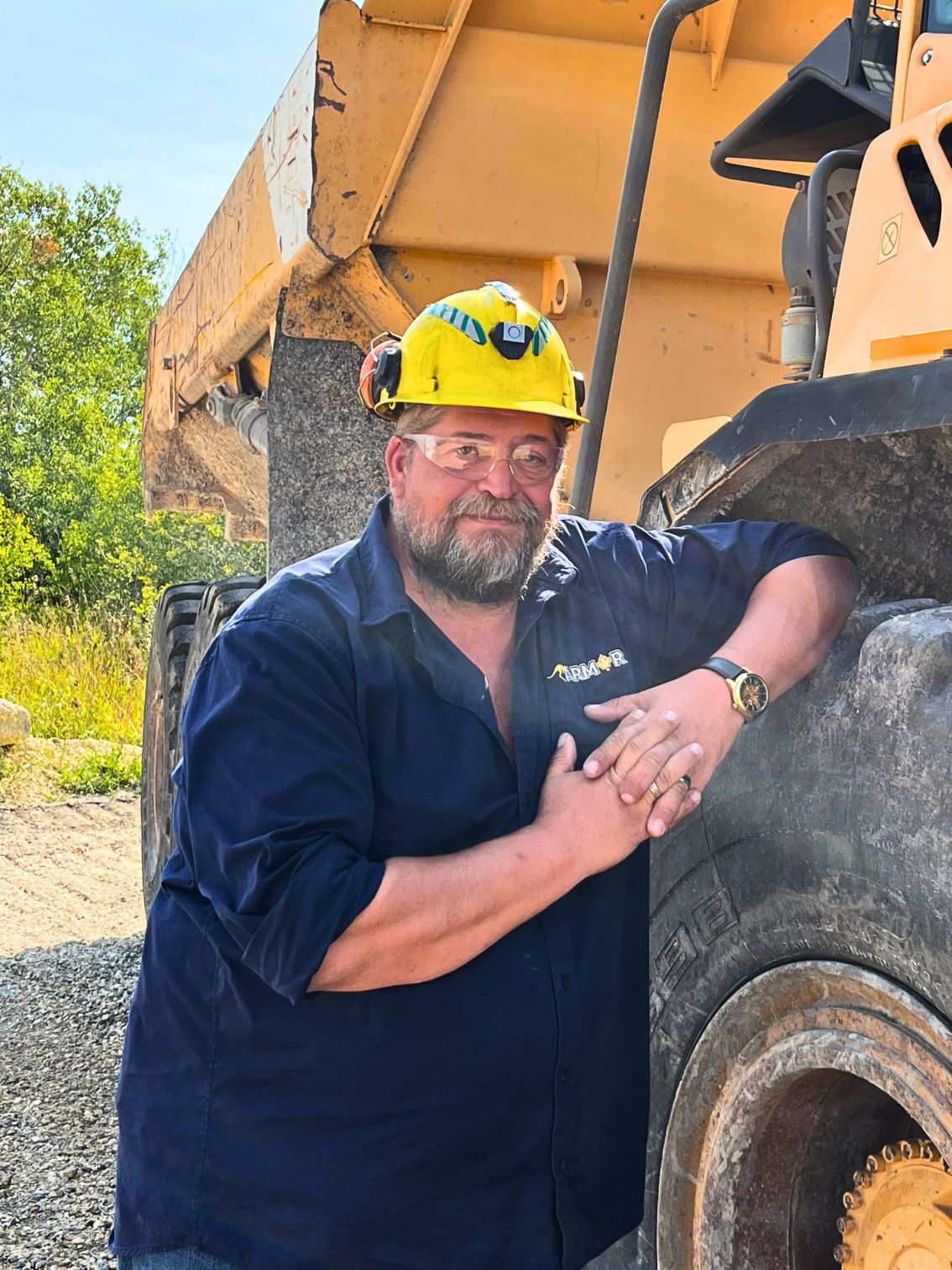
Talk To Mark Klatt – Founder, TARMOR
TARMOR brings over 50 years of preventative maintenance and management experience in Canada and Australia to mining, heavy equipment, civil, forestry, farming, transport and government operations.
Our goal is to take you from firefighting into control of your operations.